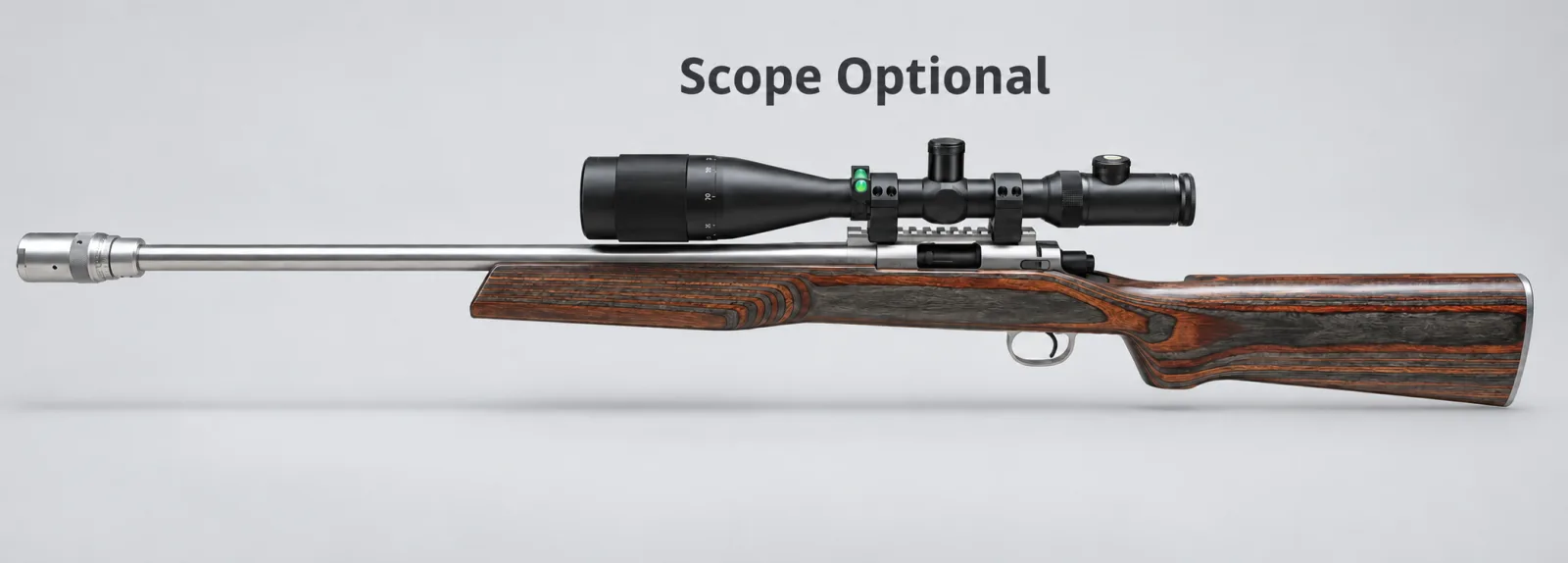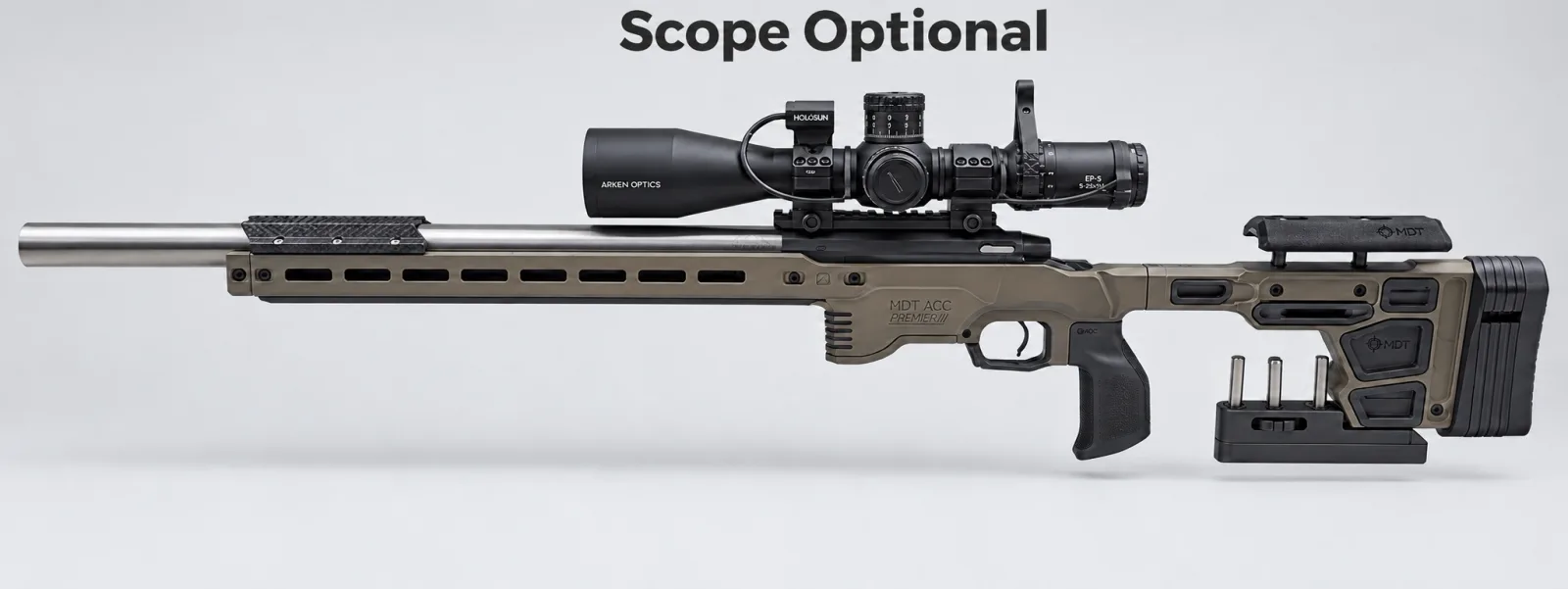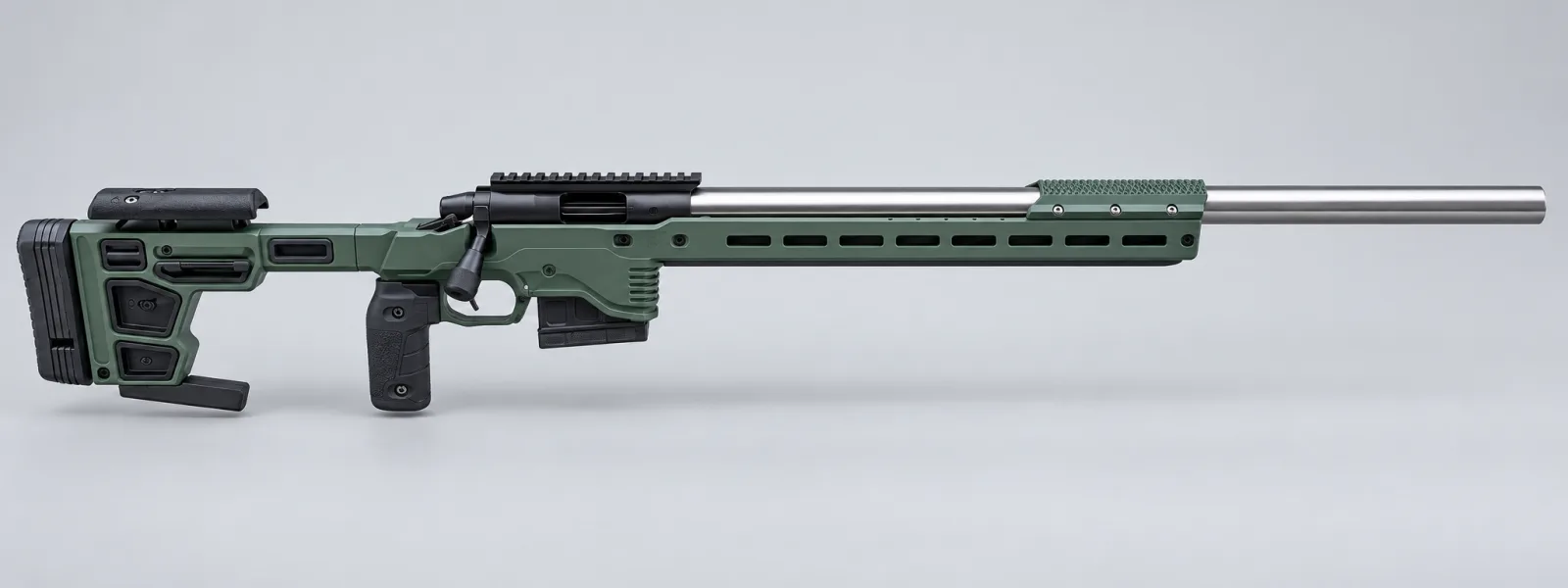
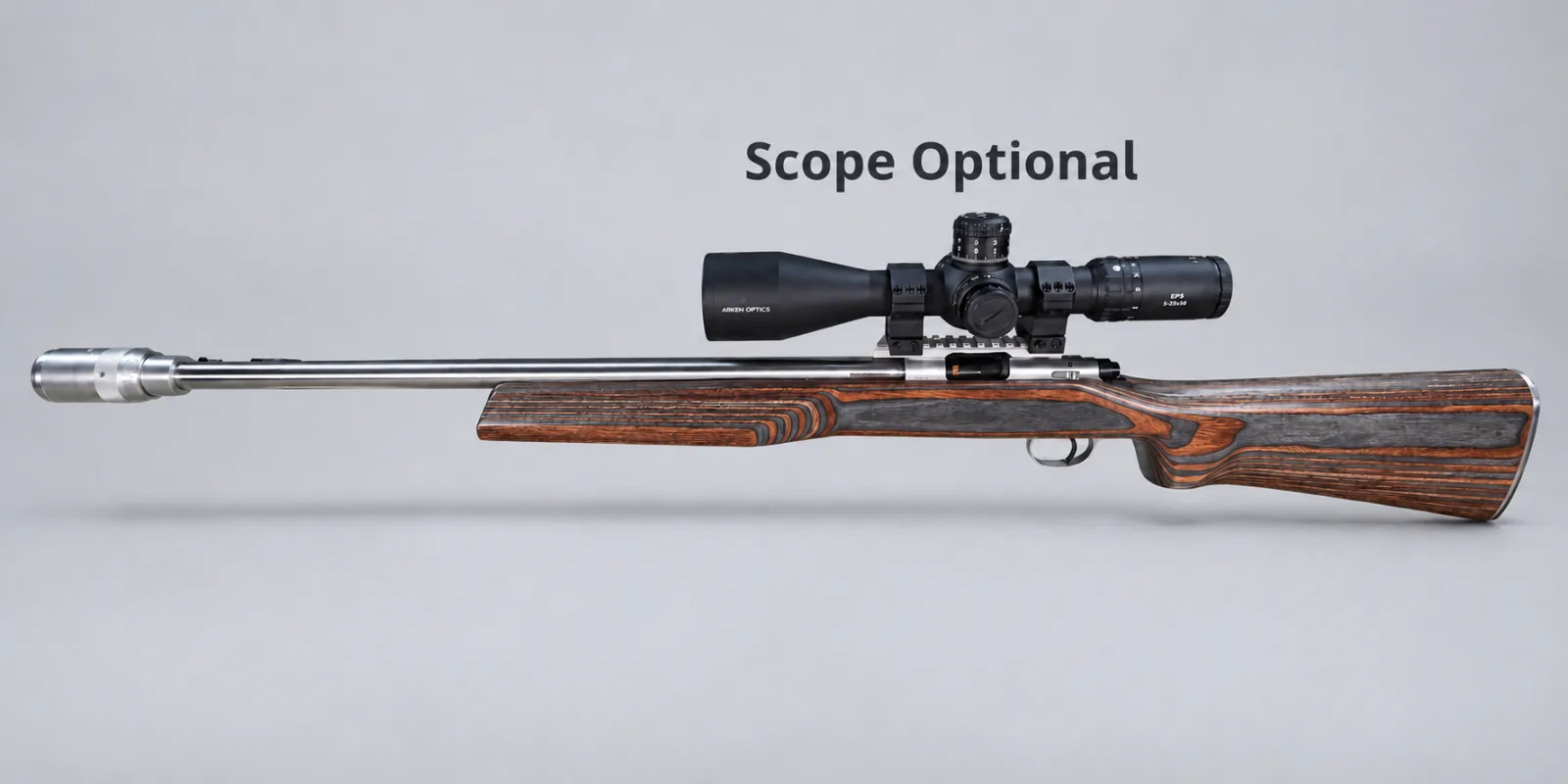
Walk the line at a rimfire benchrest match and you’ll notice that almost every serious rifle has something extra on the end of the barrel: a tuner. To a newcomer it looks like a muzzle brake or a weight. To a benchrest shooter, it’s one of the most important accuracy tools on the rifle.
Here’s what a tuner actually does, why it works, and how to set one up.
The Problem: Barrels Vibrate
When a round fires, the barrel doesn’t stay still. Pressure and the bullet moving down the bore make the barrel whip and vibrate in a wave-like pattern. The muzzle is moving, very slightly, at the moment the bullet leaves.
If every bullet left the muzzle at exactly the same point in that motion, every shot would go to the same place. But no ammo is perfectly consistent. Small differences in velocity mean bullets exit at slightly different times, and so at slightly different points in the muzzle’s movement. The result is vertical stringing: groups that are taller than they are wide.
The Solution: Change the Timing
A tuner is an adjustable weight threaded onto the muzzle. Moving it in or out changes how the barrel vibrates.
The goal is to adjust the barrel’s vibration so the muzzle is at a turning point, the top or bottom of its swing, as the bullet exits. At that moment the muzzle is moving the least. A slightly faster or slower bullet exits while the muzzle is almost still, so the impact barely changes.
Shooters call this finding the “node” or a “flat spot.” When the tuner is set right, vertical shrinks and groups tighten, sometimes dramatically.
Key idea: A tuner doesn’t make bad ammo good. It makes the rifle more forgiving of the small velocity differences that exist in even the best ammunition.
Why Benchrest Shooters Rely on Them
In rimfire benchrest (ARA, IR 50/50, and similar formats), you’re shooting at scoring rings smaller than a .22 bullet hole at 50 yards. One shot slipping out of the X-ring can decide a match. A tuner gives you a way to match the rifle to your ammunition lot and conditions, and that’s why our benchrest builds, like the BR series rifles, come with a tuner installed.
How to Tune: A Step-by-Step Method
There are several tuning methods. Here’s a simple, reliable approach.
Before you start
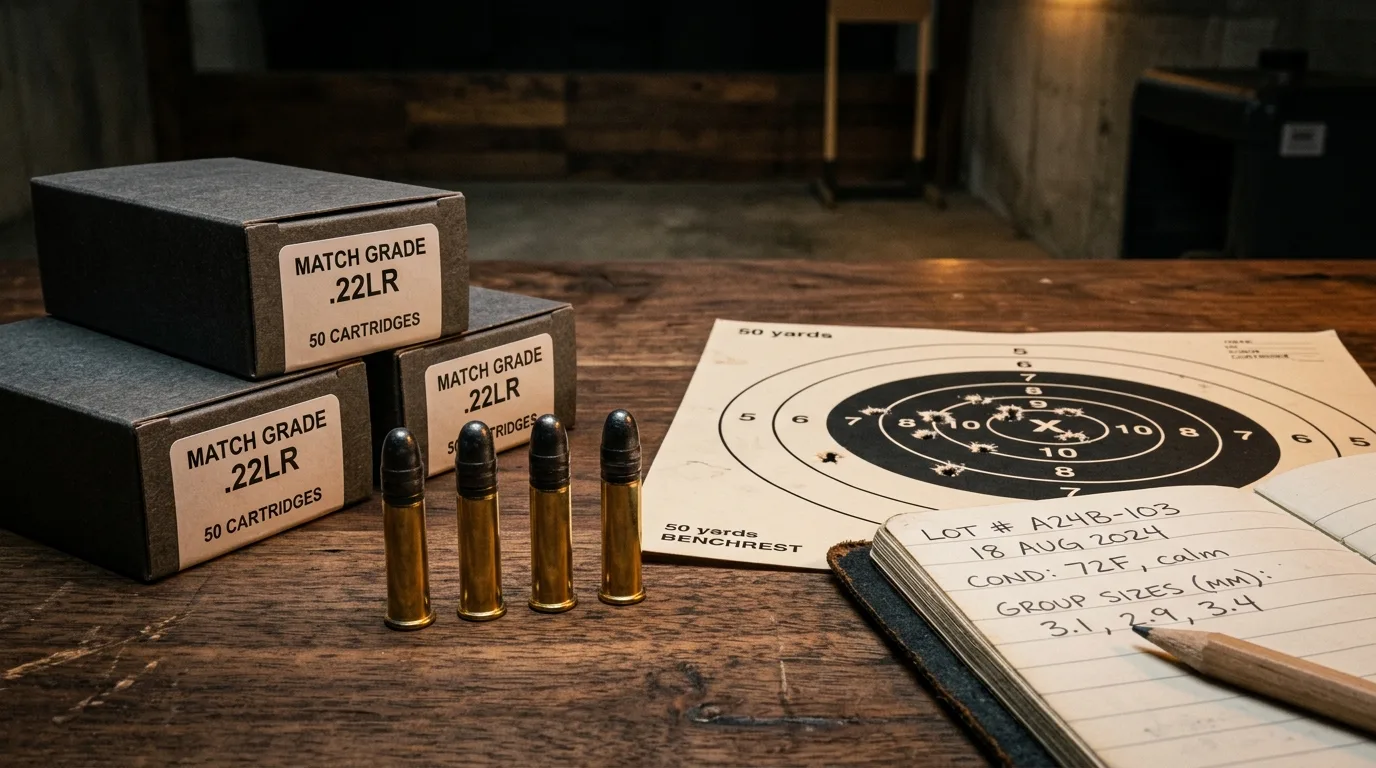
- Use one lot of ammo for the whole session. Ideally it’s a lot you’ve already tested and like. (See Why Ammo Lot Testing Matters.)
- Shoot at 50 yards, the standard benchrest distance, from a solid front rest and rear bag.
- Pick a calm day, or shoot early morning when the wind is light. Wind will confuse your results.
- Clean and foul the barrel with 20 to 30 rounds so it’s settled.
- Mark your tuner’s starting position with a paint pen or note the scale reading.
Step 1: Shoot a baseline
Shoot a 5- or 10-shot group at your starting tuner setting. Measure it and write it down, paying attention to the vertical size of the group.
Step 2: Move in consistent increments
Move the tuner a set amount, for example a fixed number of marks on its scale, always in the same direction. Shoot another group on a fresh aiming point. Repeat until you’ve covered a full turn or more of adjustment.
Step 3: Look for the flat spot
Lay out your targets in order. Somewhere you’ll see a range of settings where groups are consistently small, especially in vertical. That middle zone is your node.
Avoid settings at the very edge of a good zone. Choose the center, so small changes in temperature or ammo won’t push you out of it.
Step 4: Confirm
Go back to your chosen setting and shoot a few more groups to confirm. Then record everything: tuner setting, ammo lot, temperature, and group sizes.
When to Re-Tune
The node can shift with:
- A new ammo lot. This is the big one.
- Large temperature changes. Ammo velocity changes with temperature.
- Barrel condition. As it fouls or after a deep cleaning.
Many competitors make small tuner adjustments during a match as conditions change. Your logbook becomes your best tool here.
Tips From the Bench
- Change one thing at a time. If you change the tuner and the ammo together, you won’t know which made the difference.
- Don’t chase a single great group. Look for a zone of good groups.
- Be patient. Tuning a rifle properly takes a full range session or more, but you only have to do it once per lot.
The Bottom Line
A tuner is one of the most effective accuracy upgrades on a precision rimfire. It doesn’t replace a quality action, barrel, and ammunition, but it helps all three work together. If you’re serious about benchrest scores, it’s not optional.
Every Cybex rimfire benchrest rifle is assembled with a tuner and test-fired before it ships. See what’s ready to ship.